

















Trademark Opposition in Action: What Taylor Swift’s Latest Legal Move Teaches Brand Owners


Trademark Opposition in Action: What Taylor Swift’s Latest Legal Move Teaches Brand Owners
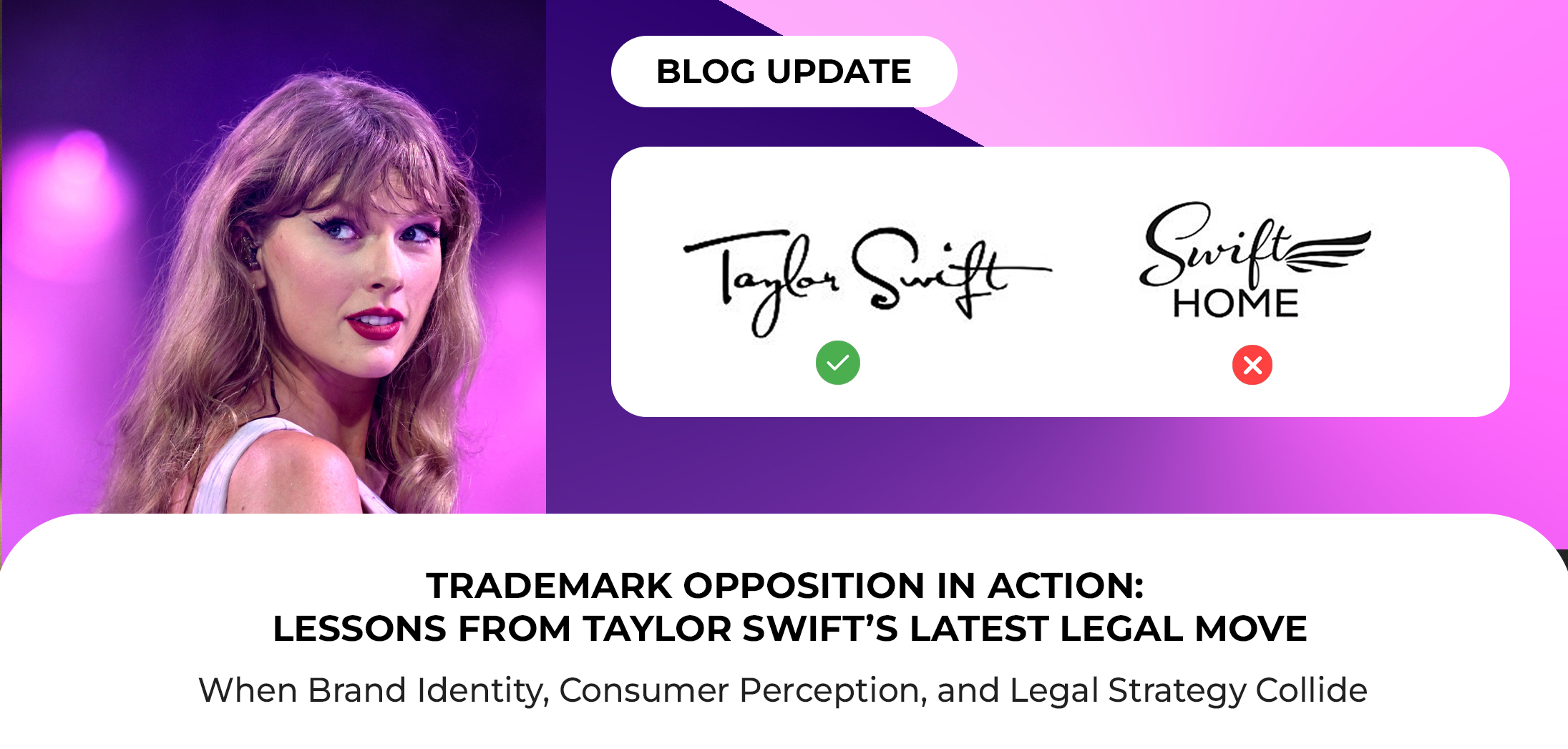
In February, Taylor Swift’s intellectual property holding company, TAS Rights Management, LLC, initiated formal trademark opposition proceedings against United States trademark application no. 99170193, filed by Cathay Home Inc..
The opposition—filed on 11 February and currently ongoing—relies on two core legal grounds under U.S. trademark law:
-
Likelihood of confusion under Section 2(d) of the Trademark Act
-
False suggestion of a connection with Taylor Swift and TAS Rights Management, LLC under Section 2(a) of the Trademark Act
While celebrity trademark disputes often generate headlines, this matter provides a far more important lesson for brand owners, founders, and in-house counsel: modern trademark risk extends beyond identical names into visual identity, consumer perception, and brand association.
1. Likelihood of Confusion (Section 2(d))
Section 2(d) remains the cornerstone of U.S. trademark enforcement. The test is not whether two marks are identical, but whether ordinary consumers are likely to believe the goods or services originate from the same source.
Key factors include:
-
Similarity in appearance, sound, meaning, and commercial impression
-
Relatedness of goods or services
-
Strength and fame of the prior mark
-
Evidence of consumer confusion
-
Channels of trade and target consumers
2. False Suggestion of a Connection (Section 2(a))
Section 2(a) protects against marks that falsely imply an association with a well-known person or institution.
To establish this claim, an opposer generally must show:
-
The mark closely approximates the person’s name or identity
-
Consumers would recognize it as pointing uniquely to that person
-
No actual connection exists
-
The person’s identity is sufficiently famous to presume association
Why Visual Identity Matters More Than Ever
Modern trademark enforcement increasingly evaluates typography, stylization, scripts, color palettes, layout, and overall commercial impression. Where consumers are trained to recognize subtle branding cues, even suggestive similarities can create legal exposure
Strategic Lessons for Businesses
-
Clearance must extend beyond name searches to logos, scripts, and brand ecosystems.
-
Fame expands enforcement reach across adjacent product categories.
-
Opposition proceedings allow early, cost-effective enforcement before litigation.
The Broader IP Message
Trademark protection requires active monitoring, enforcement, and strategic foresight. Businesses should treat intellectual property as a core asset, conduct regular brand audits, monitor conflicting filings, and seek legal advice before launch.
Conclusion
The TAS Rights Management opposition demonstrates how modern trademark law protects not only names, but commercial identity and perceived association. In today’s market, how a brand looks can be as significant as what it says.
Proactive trademark strategy is therefore essential for any business building long-term brand value.




Let’s Bring Your Vision to Life
Schedule a free 30-minute consultation with our team to discuss your goals, challenges, and how we can help elevate your brand.
Contact Us