
















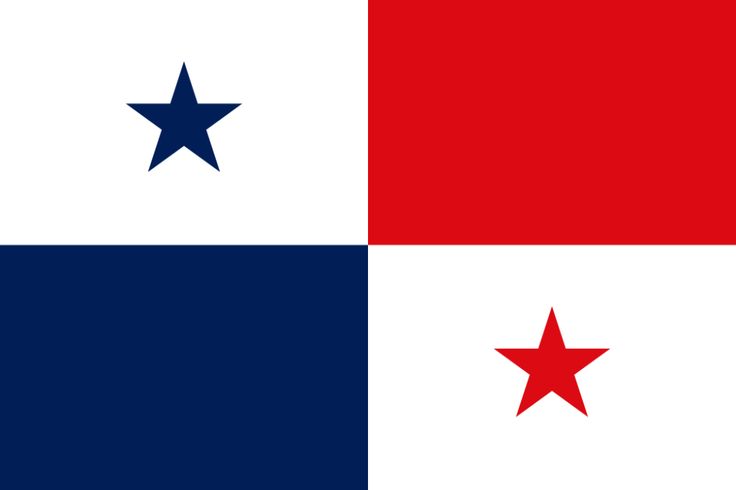

Panama
Trademark Registration in Panama - Protect Your Brand Nationwide
Trademark registration in Panama is administered by the General Directorate of Industrial Property (Dirección General de la Propiedad Industrial — DIGERPI), operating under the Ministry of Commerce and Industries (Ministerio de Comercio e Industrias — MICI) of the Republic of Panama. DIGERPI is the competent national authority responsible for the filing, examination, publication, and registration of trademarks in Panama. The Panamanian trademark system follows a first-to-file principle and includes both formal and substantive examination prior to registration. Panama is a member of the Paris Convention, the Madrid Protocol, the Nice Agreement, the TRIPS Agreement as a WTO member, and is a signatory to the Singapore Treaty on the Law of Trademarks. Panama uses the United States Dollar as its de facto official currency alongside the Panamanian Balboa (at a fixed 1:1 parity), making fee payments straightforward for international applicants.
Introduction
The Republic of Panama is a Central American nation occupying the narrow isthmus connecting North and South America, bordered by Costa Rica to the west, Colombia to the east, the Pacific Ocean to the south, and the Caribbean Sea to the north. Panama City, the capital and financial hub, is one of Latin America’s most important commercial and financial centres. Panama’s economy is uniquely shaped by the Panama Canal — one of the world’s most strategically important waterways, through which approximately 5% of global maritime trade passes annually — and by its role as a regional hub for logistics, financial services, banking, insurance, and international trade. Panama’s Colon Free Trade Zone (Zona Libre de Colón) is the largest free trade zone in the Western Hemisphere and the second-largest in the world, handling billions of dollars in goods annually and serving as a major transshipment and re-export hub for Latin American markets. Panama also operates a significant ship registry (the world’s largest by tonnage), an international banking centre hosting hundreds of licensed banks, and a growing logistics and technology sector. Panama is a member of SICA (Central American Integration System) and has concluded free trade agreements with the United States, the European Union, and numerous other partners. Trademark protection in Panama is essential for businesses in logistics, financial services, consumer goods, manufacturing, tourism, and any sector with operations in or transiting through the Panamanian market.
Why Trademark Registration in Panama Is Important for Brand Protection?
Exclusive Rights: Grants exclusive legal ownership and the right to use your trademark throughout the Republic of Panama for the registered goods and services, with statutory priority over later conflicting marks under the first-to-file system.
Legal Enforcement: Enables enforcement through DIGERPI, the civil and criminal courts of Panama, and customs authorities, with civil, administrative, and criminal remedies available under Law No. 35 of 1996 and subsequent legislation.
Colon Free Trade Zone — Anti-Counterfeiting: The Colon Free Trade Zone processes billions of dollars in goods annually and is a major source of counterfeit and infringing merchandise entering Latin American markets. Trademark registration combined with customs recordal at the Colon FTZ is one of the most important anti-counterfeiting measures available to brand owners with Latin American exposure.
Canal, Ship Registry & Financial Hub: Panama’s Panama Canal, maritime flag registry, and banking centre make it a nexus for global trade and financial flows where brand protection in shipping, financial services, and logistics is commercially significant.
Madrid Protocol Gateway: Panama’s Madrid Protocol membership enables cost-effective multi-country filing strategies that include Panama as part of broader Latin American or global trademark portfolios.
Asset Value & Panama Holding Structures: A registered trademark is a transferable intangible asset that can be licensed, franchised, pledged, or assigned to support commercial growth, free zone operations, and corporate transactions structured through Panama’s holding company and financial services framework.

Trademark Registration Procedure in Panama
Here is the step-by-step process followed for trademark registration in Panama. Legacy Partners manages each stage on your behalf — from initial clearance through to issuance of the registration certificate by DIGERPI.
Panama Trademark Search & Application
We begin with a comprehensive availability search of the DIGERPI register and the WIPO Madrid Database (for international registrations designating Panama) to identify potential conflicts before filing. Once clearance is confirmed, the application is prepared in Spanish and filed with DIGERPI electronically or in hard copy — either as a national filing or as the national phase of a Madrid Protocol designation. Legacy Partners manages all documentation, translation, and power of attorney requirements on the client’s behalf through its network of Panamanian IP attorneys.
Formal & Substantive Examination
DIGERPI conducts a formal examination (verifying applicant details, classification, fees, power of attorney, and documentation completeness) followed by a substantive examination on absolute grounds (distinctiveness, descriptiveness, deceptiveness, public order, and official emblems) and relative grounds (conflicts with earlier registered marks and well-known marks in Panama), consistent with Law No. 35 of 1996 and Panama’s TRIPS obligations. Office actions must be responded to within prescribed deadlines. Foreign applicants must be represented by a locally registered Panamanian IP attorney or agent.
Acceptance and Publication
Once the application clears examination, the mark is published in the Official Gazette of the Republic of Panama (Gaceta Oficial), opening a two-month window for third-party opposition, extendable upon application.
Opposition Period
Third parties holding prior rights may file an opposition within two (2) months from the date of publication in the Gaceta Oficial (extendable). Grounds include identity or similarity with an earlier registered or well-known mark, bad-faith filing, and other grounds under Law No. 35. Oppositions are heard by DIGERPI, with appeal available to the Third Chamber of the Supreme Court of Justice of Panama.
Registration & Certificate
If no successful opposition is raised, DIGERPI registers the mark in the Panamanian Trademark Register, issues a Certificate of Registration, and publishes the registration in the Gaceta Oficial. The mark is then fully enforceable against third parties throughout Panama.
Validity & Renewal
The trademark is valid for 10 years from the filing date and is renewable indefinitely for successive 10-year periods on payment of renewal fees to DIGERPI. A 6-month grace period is available after expiry, subject to a late renewal surcharge.
Governing Law
Trademark protection in Panama is principally governed by Law No. 35 of 10 May 1996 on Industrial Property (Ley No. 35 sobre Propiedad Industrial), as substantially amended by Law No. 61 of 2012, Executive Decree No. 7 of 2012, and subsequent implementing regulations. The Law establishes DIGERPI as the national IP authority and provides a comprehensive framework for trademark registration, examination, opposition, licensing, assignment, enforcement, and cancellation. Panama’s trademark law reflects its TRIPS obligations and its commitments under the US-Panama Trade Promotion Agreement (TPA, 2012) and the EU-Central America Association Agreement (2013), both of which include IP protection chapters that have driven progressive strengthening of Panamanian trademark law. The Law is supplemented by the Judicial Code for court enforcement and the Criminal Code for criminal enforcement. Panama is a member of the Paris Convention, the Madrid Protocol, the Nice Agreement, the TRIPS Agreement, and is a signatory to the Singapore Treaty on the Law of Trademarks.
Trademark Classes Panama (Nice Classification)
Panama follows the Nice Classification system, categorising trademarks into 45 classes — 34 for goods (Classes 1–34) and 11 for services (Classes 35–45). DIGERPI permits multi-class applications, and the specification of goods and services must be in Spanish and must be clear, precise, and consistent with Nice Classification standards. Expert guidance on class selection is particularly important for Panama’s key sectors: financial and banking services (Class 36), logistics and shipping (Class 39), free zone trading and wholesale distribution (Class 35), insurance (Class 36), tourism and hospitality (Classes 39, 43), consumer goods (Classes 25, 29, 30, 32, 33), pharmaceuticals (Class 5), and technology services (Class 42).
Trademark Services Available in Panama
Attorney-Assisted Search
In-depth legal search of the DIGERPI register and WIPO Madrid Database to identify potential conflicts before filing
Trademark Registration Services
Complete filing and application management for Panama national trademarks — handled by registered Panamanian IP attorneys.
Trademark Renewal Services
Hassle-free renewals to maintain your Panama trademark protection, with proactive deadline monitoring and docketing.
Watch & Monitoring Services
Continuous monitoring of DIGERPI and WIPO Madrid publications to identify potential conflicts across Panama and Latin America.
Ownership Transfer / Assignment
Efficient handling of trademark ownership transfers, corporate restructuring recordals, and IP holding arrangements with DIGERPI.
Licensing & Franchising Support
Expert guidance to license, franchise, or expand your brand within Panama and across the Central American and broader Latin American markets.
Documents for Filing
Applicant name & business entity (individual or company, with registered address)
Trademark details (word mark, figurative/logo, combined, 3D, colour, sound, or other non-traditional mark)
Classes of goods and/or services (Nice Classification)
Power of attorney (authenticated by a Panamanian consul or apostilled for foreign applicants; filed within 3 months of application date)
Specimen or representation of the mark (for figurative or non-standard marks)
List of goods/services (in Spanish, clear and precise specification)
Priority documents (if claiming convention priority under the Paris Convention)
Certified Spanish translation of any supporting document not originally in Spanish
Fees are indicative and subject to change. Contact us for the latest details.
**Last updated on: March 17, 2026
Timeline
Approximately 6 to 12 months for registration in a straightforward case without objections or oppositions — one of the faster timelines among Latin American trademark offices, reflecting DIGERPI’s investment in electronic filing infrastructure and streamlined examination procedures. DIGERPI has implemented an e-filing system that has significantly improved processing efficiency. Where a Madrid Protocol designation is used, the timeline may vary. Cases involving oppositions will extend beyond this range.
Validity & Renewal
The trademark is protected for 10 years from the filing date, renewable indefinitely for further 10-year periods by paying renewal fees to DIGERPI. A 6-month grace period is available after expiry, subject to a late renewal surcharge. Panama requires genuine use of the trademark within three (3) years of registration — a shorter non-use vulnerability period than the five years applicable in many jurisdictions. Failure to use the mark within this period may expose it to cancellation on non-use grounds upon application by any interested third party before DIGERPI or the competent court. Rights holders should plan for genuine commercial use in Panama and document use evidence carefully.
Frequently Ask Questions
Get A QuoteQ1: How long does trademark registration take in Panama?
Trademark registration in Panama typically takes approximately 6 to 12 months from the filing date through to issuance of the registration certificate by DIGERPI, in a straightforward case without objections or oppositions. DIGERPI’s electronic filing system has significantly improved processing efficiency, making Panama one of the faster Latin American trademark offices.
Q2: Do I need a local representative to file a trademark in Panama?
Q3: Are multi-class trademark applications permitted in Panama?
Q4: What is the validity period of a trademark registration in Panama?
Q5: What is the use requirement for trademarks in Panama?
Q6: What language is required for filing in Panama?
Q7: What is the opposition period after publication in Panama?
Q8: Is Panama a member of the Madrid Protocol?
Q9: Why is the Colon Free Trade Zone significant for trademark protection?
Q10: What currency is used for official fees in Panama?
Q11: Does a Panama trademark protect me in other Central American countries?
Q12: Does Panama recognise well-known marks?
Q13: Can I assign or licence my trademark in Panama?
Q14: How does the Panama Canal and ship registry affect trademark strategy?
Q15: What is the best trademark registration provider for Panama?

Need expert guidance for Panama trademark registration?
Book a 1:1 consultation with our trademark specialists.
Register early under the first-to-file system to prevent brand hijacking.
Insights on Panama IP Protection
Read More InsightsNo country category assigned.
Ready To Protect Your Brand
Don’t leave your intellectual property unprotected. With LP GLOBAL, trademark registration becomes clear, affordable, and stress-free. Whether you’re a startup or an established business, our expert team ensures your brand is safeguarded every step of the way.