India Trade Marks Registry Lists All Oppositions Pending Since 1996–2010 for Final In-Person Hearings

 India
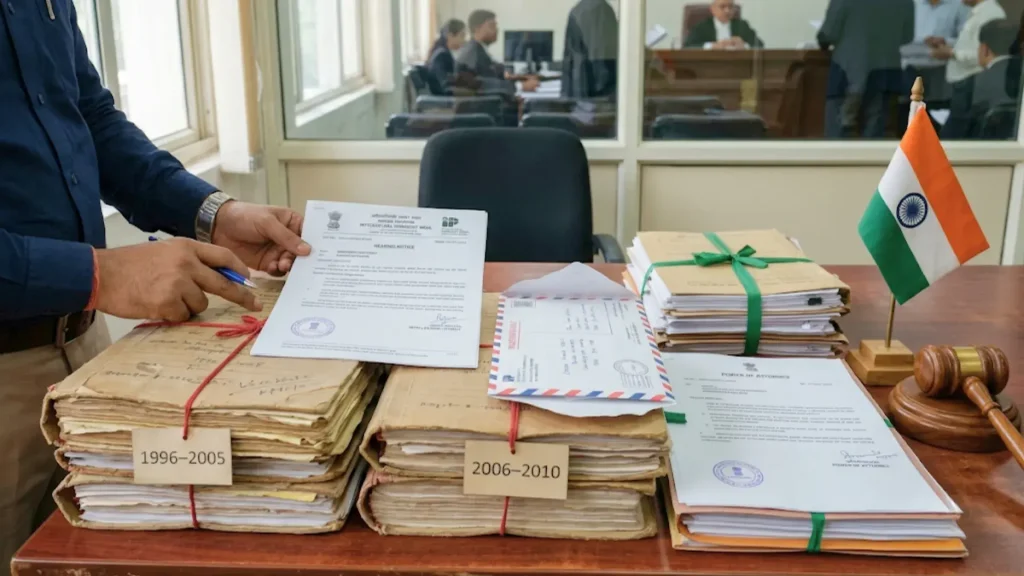
The Office of the Controller General of Patents, Designs & Trade Marks (CGPDTM) has issued a public notice dated 2 November 2026 announcing a Special Drive, under the Swachhata Abhiyan, for the expedited disposal of long-pending trade mark opposition proceedings. Every opposition pending up to 2010, across all Trade Marks Registry jurisdictions, is now scheduled for final hearing, and these hearings will be held in person at the jurisdictional Registry office.
For applicants, opponents and brand owners with legacy Indian files, including foreign rights holders whose matters were filed through local agents nearly two decades ago, this is likely the final procedural window before these disputes are decided. Hearing notices are being sent only by Registered Post to the address for service on record, which makes an outdated address the single biggest risk in this drive.
Quick Facts |
Details |
| Issuing authority | Office of the Controller General of Patents, Designs & Trade Marks (CGPDTM), Ministry of Commerce & Industry (DPIIT) |
| Notice reference | Public Notice No. CG/F/CGPDTM/DL-11/4992 |
| Date of notice | 2 November 2026 |
| Matters covered | All trade mark opposition proceedings pending up to 2010 (two batches: 1996–2005 and 2006–2010) |
| Geographic scope | All Trade Marks Registry (TMR) jurisdictions |
| Stage | Final hearing |
| Hearing mode | Physical (in-person) only, at the jurisdictional TMR office |
| How parties are notified | Individual hearing notices by Registered Post to the registered address for service |
| What to bring | Self-attested physical copies of documents, pleadings, powers of attorney and evidence, as originally filed |
| Initiative | Swachhata Abhiyan special drive to clear administrative backlog |
What Does the CGPDTM Special Drive on Old Trade Mark Oppositions Cover?
The drive targets the oldest part of the Registry’s opposition backlog. The notice addresses all applicants, opponents and legal practitioners or agents, and confirms that every opposition proceeding pending up to 2010 is listed for final hearing. The matters are organised into two batches: oppositions dating from 1996 to 2005, and oppositions dating from 2006 to 2010.
The Registry frames the exercise as part of the Swachhata Abhiyan’s push for clean, efficient and accountable governance through the elimination of administrative backlogs. In practical terms, it is an effort to bring to a conclusion disputes that have remained open for between 16 and 30 years.
Matters from the earliest part of the window predate the commencement of the Trade Marks Act, 1999 in September 2003 and were originally instituted under the Trade and Merchandise Marks Act, 1958. Those proceedings continue under the transitional provisions of the 1999 Act, so parties should expect the Registry to look closely at how the original pleadings and evidence were framed.
Why Are These Opposition Hearings Being Held in Person Instead of Virtually?
The Registry has relied heavily on virtual hearings in recent years. The notice explains why this drive is different: many applications and oppositions filed before 2010 do not have an updated email address, contact number or other credentials on record, so virtual hearings cannot be organised for them. To give these parties an opportunity to be heard, the Registry will conduct the entire drive in physical (in-person) mode at the respective jurisdictional Trade Marks Registry offices.
How Will Parties Be Notified of Their Hearing Date?
The Registry is dispatching individual hearing notices by Physical Registered Post to the registered address for service of each party. Each notice will set out the exact date, time, venue and bench before which the matter will be heard.
This is where most of the risk lies. Files from 1996–2010 frequently list agents who have since retired, law firms that have merged or closed, and businesses that have relocated, restructured or changed hands. A notice sent to a defunct address may never reach the party, and the hearing will not wait for it.
What Documents Must Parties Bring to the Final Hearing?
The notice requires parties attending the hearing to bring self-attested physical copies of:
- All relevant documents on which they rely
- Their pleadings, such as the notice of opposition and the counter-statement
- Powers of attorney authorising their agent or advocate
- All evidence relied upon
These must match what was originally filed with the Registry. For files that are decades old, assembling a complete and accurate set may require retrieving archived records from former counsel or inspecting the Registry’s file.
What Happens If a Party Does Not Appear at the Hearing?
Because these matters are listed for final hearing, an absence is likely to be decisive. The Registrar may proceed to decide the matter on the existing record, and a party that fails to appear risks having its application or opposition treated as abandoned. For an applicant, that can mean losing a trade mark application that has been pending since the 1990s or 2000s; for an opponent, it can mean a mark it has fought for years proceeding to registration.
How Is This Different From the August 2026 Special Disposal Drive?
This is the second opposition-focused drive announced by the Registry in 2026. The two run on different tracks:
- August 2026 drive (Notice dated 31 August 2026): covers pending oppositions where the parties have settled or wish to withdraw. Hearings run on every working Friday until December 2026 in hybrid mode.
- November 2026 drive (Notice dated 2 November 2026): covers all oppositions pending up to 2010, contested or not, listed for final hearing in physical mode only.
Parties to a pre-2010 opposition that has already been settled should consider closing it through the Friday settlement route rather than waiting to be called for a contested final hearing. The November drive also follows the pattern of the Registry’s 2024 special drive, which called old applications up to 2010 for physical show-cause hearings.
What Should Applicants and Opponents Do Now?
- Audit your portfolio. Identify every Indian application or opposition you are party to that was filed or opposed in or before 2010 and remains pending. Check the e-status of each on the Registry’s portal.
- Verify the address for service. Confirm that the address for service on record is current. If it is not, file a request to update it immediately and add a working email address and phone number.
- Confirm who represents you. If your original agent is no longer acting, appoint new counsel and file a fresh authorisation so they can appear and receive notices.
- Record changes in ownership. Where the applicant or opponent has merged, been acquired, or assigned the mark, ensure the change is recorded so the right entity appears at the hearing.
- Rebuild the file. Assemble self-attested copies of all pleadings, evidence and powers of attorney exactly as originally filed.
- Reassess the dispute. Decide whether the matter is still commercially worth contesting. If not, a negotiated settlement or withdrawal may be faster and cheaper than a final hearing.
- Watch the cause lists. Do not rely solely on the postal notice. Monitor the Registry’s hearing cause lists for your application numbers.
Which Trade Marks Registry Office Will Hear My Opposition?
India has five Trade Marks Registry offices: Mumbai (head office), Delhi, Kolkata, Chennai and Ahmedabad. Each matter is heard at the office with territorial jurisdiction over it, which is generally determined at the time of filing by the applicant’s principal place of business in India or, for applicants without one, by the address for service in India. The individual hearing notice will confirm the venue and bench for each matter.
Resolve Your Pending Indian Trade Mark Opposition
Is your trade mark opposition pending since 2010 or earlier? Our India trade mark team can help you prepare for the final hearing and protect your brand. Contact us today at info@legacypartners.global.
Frequently asked questions
Which trade mark oppositions are covered by the November 2026 Special Drive?
Every opposition proceeding pending before the Indian Trade Marks Registry up to 2010, across all TMR offices. The Registry has grouped them into two batches: matters from 1996–2005 and matters from 2006–2010. All are listed for final hearing.
Can I attend the Special Drive hearing virtually?
No. The notice states that the drive will be conducted in physical (in-person) mode at the jurisdictional Trade Marks Registry office, because many pre-2010 files lack the updated email addresses and phone numbers needed for virtual hearings.
How will I know the date of my opposition hearing?
The Registry is dispatching individual hearing notices by Registered Post to the address for service on record for each party. Each notice sets out the date, time, venue and bench. Parties should also monitor the e-status of their applications and the TMR cause lists.
What if my address for service has changed since the opposition was filed?
Update it immediately by filing the appropriate request with the Registry and adding a current email address and phone number. A notice sent to an outdated address may never reach you, and the hearing may proceed without you.
What documents do I need to bring to the hearing?
Self-attested physical copies of all relevant documents, pleadings, powers of attorney and evidence relied upon, exactly as originally filed with the Registry.
We have already settled the opposition. Do we still need to attend?
Settled matters can be closed through the Registry's separate Special Disposal Drive for settlement and withdrawal cases, announced on 31 August 2026, which runs on working Fridays until December 2026 in hybrid mode. Filing the settlement and withdrawal before the final hearing avoids an unnecessary contested hearing.