Bahrain Adopts the 13th Edition of the Nice Classification for Trademark Registration

 Bahrain
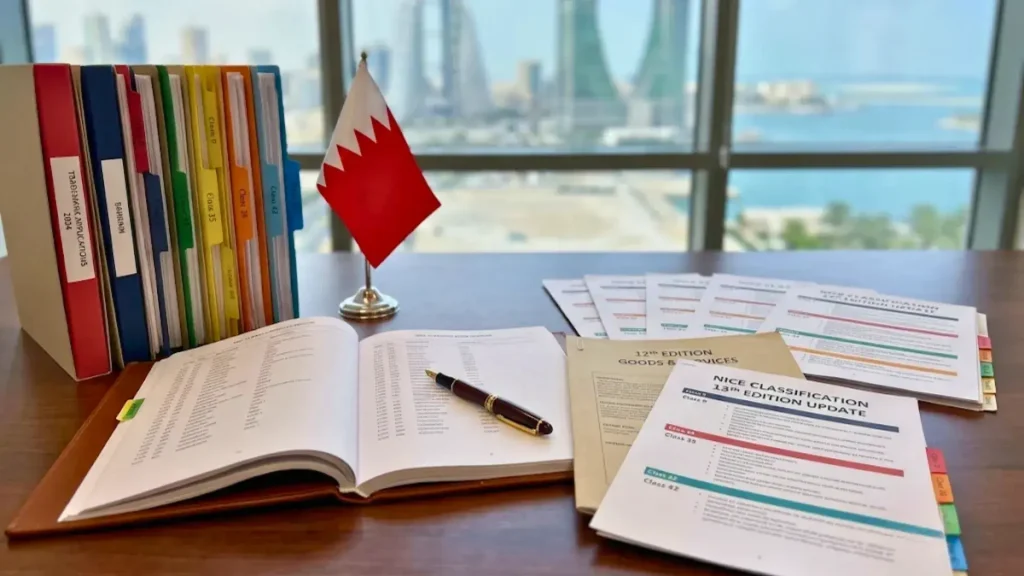
The Kingdom of Bahrain has officially adopted the 13th Edition of the Nice Classification for trademark registration, effective 1 October 2026. The Bahrain Trademark Office, operating under the Ministry of Industry and Commerce, now requires all new trademark applications to comply with the updated classification framework.
This adoption aligns Bahrain with the latest international standards for classifying goods and services and follows similar moves by the UAE, Qatar, and Serbia earlier in 2026. For trademark owners filing in Bahrain or managing existing portfolios in the Kingdom, this update carries direct implications for filing strategy, portfolio management, and brand protection.
What Is the Nice Classification and Why Does It Matter?
The Nice Classification is the internationally recognised system administered by the World Intellectual Property Organization (WIPO) that organises goods and services into 45 classes for trademark registration. There are 34 classes for goods and 11 classes for services. Every country that is a signatory to the Nice Agreement uses this system as the basis for examining and registering trademarks.
WIPO revises the Nice Classification periodically to reflect changes in technology, commercial activity, and the types of goods and services entering the market. New editions are published every three years, with annual updates to each edition.
The 13th Edition entered into force globally on 1 January 2026. Bahrain, which has been a party to the Nice Agreement since 2005, has now formally adopted this latest edition with effect from 1 October 2026.
Proper classification matters because it determines the scope of legal protection a trademark receives. Filing under an incorrect class can lead to examination delays, classification objections, partial refusals, or gaps in brand protection.
When Did Bahrain Adopt the 13th Edition?
The Bahrain Trademark Office, under the Directorate of Foreign Trade and Industrial Property within the Ministry of Industry and Commerce, confirmed the adoption of the 13th Edition effective 1 October 2026.
All new trademark applications filed from this date onward must follow the updated classification framework, including the revised class structure, updated terminology, and relevant explanatory guidance.
This adoption is part of a broader pattern of IP modernisation in Bahrain. In August 2026, the Ministry launched an upgraded electronic service for trademark registration that significantly reduces processing times. The Kingdom also acceded to the Locarno Agreement (for industrial design classification) under Law No. 21 of 2026, effective 29 October 2026.
What Are the Key Changes in the 13th Edition?
The 13th Edition does not introduce any new class numbers. All 45 classes remain intact. However, it brings meaningful reclassifications of specific goods and services, updated terminology, refined definitions, and new entries that reflect modern commerce and technology.
The key areas affected include:
- Eyewear and optical products
- Emergency and rescue vehicles
- Personal care products
- Electrically heated clothing
- Essential oils
- Artificial intelligence services
- Optician services
- Notarial services
- Hospitality services
These changes aim to reduce the overloading of certain classes (particularly Class 9), better reflect the functional purpose of products, and account for the growing role of AI and digital services.
Which Goods Have Been Reclassified Under the 13th Edition?
Several important goods have moved to different classes. Businesses operating in the following sectors should take special note:
Eyewear and Optical Products (Class 9 to Class 10)
Corrective spectacles, sunglasses, contact lenses, frames, and related optical accessories have moved from Class 9 to Class 10. This reclassification reflects the medical and therapeutic function of these products rather than their previous grouping with electronic and technological goods.
Smart glasses and protective eyewear remain in Class 9, as they are considered electronic or safety products.
Emergency and Rescue Vehicles (Class 9 to Class 12)
Fire engines, ambulances, lifeboats, and similar emergency vehicles have moved from Class 9 to Class 12, consolidating all vehicle types under a single class.
Electrically Heated Clothing (Class 11 to Class 25)
Heated clothing items are now classified as apparel in Class 25 rather than under heating apparatus in Class 11.
Personal Care Products (Class 10 to Class 21)
Electric toothbrushes and tongue scrapers have moved from Class 10 (medical) to Class 21 (household items), acknowledging their everyday consumer use.
Essential Oils (Subdivided Across Multiple Classes)
Essential oils are no longer grouped under a single class. They are now classified based on intended use:
Class | Intended Use |
| Class 1 | Industrial or manufacturing use |
| Class 3 | Cosmetic use |
| Class 5 | Medical or therapeutic use |
| Class 30 | Food flavouring use |
What New Services Does the 13th Edition Recognise?
The 13th Edition also introduces several new service categories:
Artificial Intelligence as a Service (AIaaS) in Class 42
AI services are now expressly recognised with their own entry in Class 42. Previously, AI-related services were often grouped under broader headings like SaaS. This change gives technology businesses clearer protection pathways for AI-specific offerings.
Airport Lounge Services in Class 43
Booking and arranging access to airport lounges is now a specifically recognised service in Class 43 under hospitality-related services.
Notarial Services in Class 45
Notary services have been expressly added to Class 45 under legal services.
Optician Services (Reclassified from Class 44)
Optician services previously fell under Class 44 as a broad category. The 13th Edition splits them based on function: retail-related optician services now fall under Class 35, while repair and maintenance of optical goods fall under Class 37.
How Does This Affect New Trademark Applications in Bahrain?
All trademark applications filed in Bahrain from 1 October 2026 onward must comply with the 13th Edition of the Nice Classification. This means:
- Goods and services descriptions must use the updated terminology
- The correct class must be selected based on the 13th Edition framework
- Applications using outdated descriptions from previous editions may face objections, delays, or partial refusals
Bahrain’s Trademark Office examiners will apply the 13th Edition when assessing new filings. Businesses relying on specifications prepared under the 11th or 12th Edition should revise their descriptions before submission.
Are Existing Trademark Registrations in Bahrain Affected?
Existing trademark registrations in Bahrain will not be automatically reclassified. Trademarks remain in the class under which they were originally filed and registered.
However, the update becomes relevant when existing registrations undergo renewal or amendment. At that stage, the Trademark Office may require alignment with the 13th Edition, subject to applicable requirements.
This creates a practical scenario where older and newer filings for similar goods may exist in different classes. For example, sunglasses registered before October 2026 remain in Class 9, while new filings for the same product must go to Class 10.
Trademark owners should factor this into search, clearance, and enforcement strategies, ensuring both the old and new classes are covered.
What Should Trademark Owners Do Before Filing in Bahrain?
Businesses planning trademark applications in Bahrain after 1 October 2026 should take the following steps:
1. Review Goods and Services Descriptions
Ensure that proposed specifications align with the 13th Edition terminology. Descriptions prepared under previous editions may no longer be accepted.
2. Verify Class Selection
Check whether the goods or services you intend to cover have been reclassified. Eyewear, essential oils, AI services, and heated clothing are some of the most commonly affected categories.
3. Audit Your Existing Portfolio
If you hold existing registrations in Bahrain, review them ahead of upcoming renewals or amendments. Identify where reclassifications may create gaps in protection.
4. Update Trademark Watch Services
If your monitoring services are set to specific classes, ensure they cover both the old and new classes to capture potentially conflicting filings.
5. Align Multi-Jurisdictional Filings
For businesses filing across the GCC, ensure your classification strategy accounts for the different editions in force across each country.
Common Mistakes to Avoid When Filing Under the Updated Classification
Using Old Terminology
Goods descriptions from previous editions may not be accepted. Always verify terminology against the 13th Edition before filing.
Filing Eyewear Under Class 9
Sunglasses, corrective spectacles, and contact lenses must now go in Class 10. Only smart glasses and protective eyewear remain in Class 9.
Listing AI Services Without Specificity
The 13th Edition recognises AIaaS in Class 42 as a distinct category. Vague descriptions may face objections. Use precise terminology.
Overlooking Essential Oil Reclassifications
Essential oils are now split across four classes depending on purpose. Filing under the wrong class can leave critical products unprotected.
Ignoring Portfolio Gaps at Renewal
Existing registrations that cover reclassified goods may leave protection gaps if supplementary filings are not made in the new class.
Protect Your Trademark in Bahrain with Expert Guidance
At Legacy Partners, we bring over 15 years of experience in trademark registration, IP portfolio management, and brand protection across the UAE, GCC, India, and the UK. As an authorised representative, we guide businesses through every step of the trademark filing process, from classification review and application preparation to prosecution and portfolio strategy. info@legacypartners.global
Frequently asked questions
What is the Nice Classification?
The Nice Classification is an international system administered by WIPO that organises goods and services into 45 classes for trademark registration. It is used by trademark offices worldwide, including Bahrain.
When did Bahrain adopt the 13th Edition?
Bahrain adopted the 13th Edition of the Nice Classification effective 1 October 2026.
Does the 13th Edition add new classes?
No. All 45 classes remain unchanged. The 13th Edition reclassifies certain goods and services across existing classes and introduces new terminology.
Which authority administers trademarks in Bahrain?
The Trademark Office under the Directorate of Foreign Trade and Industrial Property, Ministry of Industry and Commerce, administers trademark registration in Bahrain.
Are existing trademark registrations automatically reclassified?
No. Existing registrations remain in their original classes. Reclassification may be relevant at the time of renewal or amendment.