
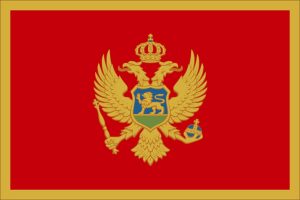

Trademark Registration in Montenegro: Protect Your Brand Nationwide
Trademark registration in Montenegro is administered by the Intellectual Property Office of Montenegro (Zavod za intelektualnu svojinu Crne Gore — ZIPSCG), the central government authority responsible for the filing, examination, publication, and registration of trademarks in Montenegro. ZIPSCG operates under the Government of Montenegro and its procedures are progressively harmonised with EU IP law as part of Montenegro’s EU accession process — Montenegro is an EU candidate country with the most advanced accession negotiations of any Western Balkans state, having opened accession talks in 2012 and provisionally closed a significant number of negotiating chapters. The Montenegrin trademark system follows a first-to-file principle and includes formal and substantive examination prior to registration. Montenegro is a member of the Paris Convention, the Madrid Protocol, the Nice Agreement, the TRIPS Agreement, and is a signatory to the Singapore Treaty on the Law of Trademarks. Notably, Montenegro unilaterally adopted the euro as its official currency in 2002 — without being an EU or Eurozone member — making it one of only two non-EU European states to use the euro as its official currency (alongside Kosovo).
On this page
Montenegro trademark registration at a glance
- Classification
- Nice Classification, 45 classes
- Madrid Protocol
- Yes, member since 2006
- Language
- Montenegrin
- Opposition period
- 3 months from publication
- Typical timeline
- 6 to 12 months without objections
- Validity
- 10 years, renewable
* Timelines assume no objections or oppositions. Laws change, so contact us to confirm current requirements.
Introduction
Montenegro is a small Adriatic and Balkan republic in southeastern Europe, sharing borders with Croatia, Bosnia and Herzegovina, Serbia, Kosovo, and Albania, with a coastline on the Adriatic Sea. Podgorica is the capital and largest city. Despite its small size — approximately 14,000 square kilometres and a population of around 620,000 — Montenegro has a distinctive combination of commercial, tourism, and geopolitical characteristics that make it commercially significant beyond its scale. Montenegro’s Adriatic coastline (the Bay of Kotor is a UNESCO World Heritage Site) anchors one of the Mediterranean’s fastest-growing luxury tourism and real estate markets, with significant foreign investment from Russia, UAE, China, and European markets. The economy is driven by tourism (accounting for a large share of GDP), financial services (Montenegro has attracted offshore and international banking activity and is developing as a financial services centre), energy (hydropower), real estate, and a growing ICT sector. Montenegro uses the euro as its official currency despite not being an EU or Eurozone member, and has been an EU candidate country since 2010 with the most advanced accession negotiations in the Western Balkans. Montenegro is also a NATO member (joined 2017), adding to its institutional stability profile. The country’s IP framework has been substantially harmonised with EU standards under the Stabilisation and Association Agreement (SAA) and ongoing accession negotiations.
Why register your trademark in Montenegro
Exclusive Rights: Grants exclusive legal ownership and the right to use your trademark throughout Montenegro for the registered goods and services, with statutory priority over later conflicting marks under the first-to-file system.
Legal Enforcement: Enables enforcement through ZIPSCG, the Commercial Court of Montenegro, and customs authorities, with civil, administrative, and criminal remedies available and increasingly aligned with EU enforcement standards.
Nationwide Protection: Secures trademark protection across the entire Montenegrin territory, including Podgorica, the Adriatic coastal region, and the mountainous interior, and supports anti-counterfeiting enforcement through the Montenegro Customs Administration.
EU Candidate & Harmonisation Value: Montenegro’s EU candidate status and substantially EU-harmonised IP framework make it strategically important for businesses with EU-adjacent operations, and a Montenegrin registration complements EUTM and regional Western Balkans IP portfolios.
Adriatic Tourism & Luxury Market: Montenegro’s booming luxury tourism and real estate market — with ongoing development on the Adriatic coast and around the Bay of Kotor, Porto Montenegro, Lustica Bay, and other premium resort projects — creates significant brand protection needs in the hospitality, real estate, and luxury goods sectors.
Asset Value: A registered trademark is a transferable intangible asset that can be licensed, franchised, pledged, or assigned to support commercial growth, real estate development, tourism franchising, and corporate transactions.
Our trademark services in Montenegro
End-to-end support from our licensed in-country attorneys, from the first search to lifelong protection.
Attorney-Assisted Search
In-depth legal search of the ZIPSCG register and WIPO Madrid Database to identify potential conflicts before filing.
Trademark Registration Services
Complete filing and application management for Montenegro national trademarks — handled by ZIPSCG-experienced IP agents in Podgorica.
Trademark Renewal Services
Hassle-free renewals to maintain your Montenegro trademark protection, with proactive deadline monitoring and docketing.
Watch & Monitoring Services
Continuous monitoring of ZIPSCG and WIPO Madrid publications to identify potential conflicts across Montenegro and the Western Balkans region.
Ownership Transfer / Assignment
Efficient handling of trademark ownership transfers, corporate mergers, and restructuring recordals with ZIPSCG.
Licensing & Franchising Support
Expert guidance to license, franchise, or expand your brand within Montenegro and across the Adriatic, Western Balkans, and EU-adjacent markets.
Opposition & Enforcement
End-to-end representation in opposition before ZIPSCG, appeal to the Administrative Court, and civil and criminal infringement proceedings.
Customs Recordal & Anti-Counterfeiting
Recordal of trademarks with the Montenegro Customs Administration and coordination of border seizure actions at Montenegrin ports, airports, and land crossings.
Trademark registration process in Montenegro
Here is how to register a trademark in Montenegro, step by step.
Here is the step-by-step process followed for trademark registration in Montenegro. Legacy Partners manages each stage on your behalf — from initial clearance through to issuance of the registration certificate by ZIPSCG.
Montenegro Trademark Search & Application
We begin with a comprehensive availability search across the ZIPSCG register and the WIPO Madrid Database (for international registrations designating Montenegro) to identify potential conflicts before filing. Once clearance is confirmed, the application is prepared in Montenegrin/Latin script and filed with ZIPSCG in Podgorica — either as a national filing or as the national phase of a Madrid Protocol designation. Legacy Partners manages all documentation, translation, and power of attorney requirements on the client’s behalf.
Formal & Substantive Examination
ZIPSCG conducts a formal examination followed by a substantive examination on absolute grounds (distinctiveness, descriptiveness, deceptiveness, public order, and official emblems), consistent with the Law on Trademarks and Montenegro’s EU harmonisation commitments under the SAA. ZIPSCG also conducts a relative grounds examination, checking for conflicts with earlier registered marks and well-known marks in Montenegro. Office actions must be responded to within prescribed deadlines.
Acceptance and Publication
Once the application clears examination, the mark is published in the Official Gazette of Montenegro (Službeni list Crne Gore), opening a three-month window for third-party opposition, extendable upon application.
Opposition Period
Third parties holding prior rights may file an opposition within three (3) months from publication (extendable). Grounds include identity or similarity with an earlier registered or well-known mark, bad-faith filing, and other grounds under the Law on Trademarks. Oppositions are heard by ZIPSCG, with appeal available to the Administrative Court of Montenegro.
Registration & Certificate
If no successful opposition is raised, ZIPSCG registers the mark in the Montenegrin Trademark Register, issues a Certificate of Registration, and publishes the registration in the Official Gazette. The mark is then enforceable against third parties throughout Montenegro.
Validity & Renewal
The trademark is valid for 10 years from the filing date and is renewable indefinitely for successive 10-year periods on payment of renewal fees to ZIPSCG. A 6-month grace period is available after expiry, subject to a late renewal surcharge.
Start your application in a few minutes. Nothing is filed until you approve the written quote.
Documents required for trademark registration in Montenegro
Applicant name & business entity (individual or company, with registered address)
Trademark details (word mark, figurative/logo, combined, 3D, colour, sound, or other non-traditional mark)
Classes of goods and/or services (Nice Classification)
Power of attorney (signed by an authorised signatory; apostille or legalisation required for non-resident applicants where applicable)
Specimen or representation of the mark (for figurative or non-standard marks)
List of goods/services (in Montenegrin, clear and precise specification)
Priority documents (if claiming convention priority under the Paris Convention)
Certified Montenegrin translation of any supporting document not originally in Montenegrin or Serbian
Timeline, validity and renewal
How long registration takes
Approximately 6 to 12 months for registration in a straightforward case without objections or oppositions — one of the faster processing timelines among Western Balkans IP offices, reflecting ZIPSCG’s well-resourced examination capacity and EU-harmonised procedures. Where a Madrid Protocol designation is used, the timeline may vary. Cases involving oppositions will extend beyond this range.
Validity and renewal
The trademark is protected for 10 years from the filing date, renewable indefinitely for further 10-year periods by paying renewal fees to ZIPSCG. A 6-month grace period is available after expiry. The trademark must be put to genuine use in Montenegro within five years of registration; failure to do so may expose the mark to revocation on non-use grounds upon application by any interested third party before ZIPSCG or the competent court. The genuine use standard is applied consistently with EU case law principles given Montenegro’s EU-harmonised IP framework.
Governing Law
Trademark protection in Montenegro is principally governed by the Law on Trademarks of Montenegro (Zakon o žigovima, as amended), which has been substantially harmonised with EU Trade Mark Directive standards under Montenegro’s SAA obligations and EU accession process. The Law is supplemented by the Law on Civil Procedure for court enforcement, the Criminal Code (Krivični zakonik) for criminal enforcement of trademark rights, and the Customs Law for border measures. Montenegro is a member of the Paris Convention, the Madrid Protocol, the Nice Agreement, and the TRIPS Agreement, and is a signatory to the Singapore Treaty on the Law of Trademarks. The Stabilisation and Association Agreement (SAA) between Montenegro and the EU (in force since 2010) includes IP harmonisation obligations that have driven progressive alignment of Montenegrin IP law with EU standards. Montenegro’s IP framework is one of the most EU-aligned in the Western Balkans.
Trademark Classes Montenegro (Nice Classification)
Montenegro follows the Nice Classification system, categorising trademarks into 45 classes — 34 for goods (Classes 1–34) and 11 for services (Classes 35–45). Multi-class applications are permitted. The specification of goods and services must be in Montenegrin and clear, precise, and consistent with Nice Classification standards. Expert guidance is particularly important for Montenegro’s key sectors: tourism and hospitality (Classes 39, 43), real estate and construction (Class 37), luxury goods and fashion (Classes 14, 25), financial and banking services (Classes 35, 36), energy and hydropower (Class 4), ICT services (Class 42), and agri-food (Classes 29, 30, 33 — including Montenegro’s distinctive wine and olive oil production).
Client stories
Businesses that trust us with their brands across borders.
We had an excellent experience working with Legacy Partners for trademark registration and brand protection services in India. Their expert team guided us throughout the filing process, ensuring accurate documentation, timely updates, and seamless support. Their professionalism and intellectual property expertise gave us confidence in protecting our brand identity while supporting our expansion into new markets.
We had a seamless experience working with Legacy Partners for trademark registration services in Bahrain. Their professional team provided excellent support throughout the trademark filing process, ensuring timely updates, accurate documentation, and smooth coordination. Their expertise in intellectual property and brand protection services helped us secure our brand identity with confidence.

* Client stories are shared with permission.
Trademark registration in Montenegro: FAQ
How long does trademark registration take in Montenegro?
Trademark registration in Montenegro typically takes approximately 6 to 12 months from the filing date through to issuance of the registration certificate by ZIPSCG, in a straightforward case without objections or oppositions. This is one of the faster processing timelines among Western Balkans IP offices.
Do I need a local representative to file a trademark in Montenegro?
Foreign applicants without a domicile or registered business in Montenegro are required to act through a locally authorised IP agent or attorney to file and prosecute trademark applications before ZIPSCG. Legacy Partners provides full local representation through its network of ZIPSCG-experienced professionals in Podgorica.
Are multi-class trademark applications permitted in Montenegro?
Yes. ZIPSCG permits multi-class applications. A single application may cover multiple classes of goods and/or services, with an additional official fee payable for each class beyond the first.
What is the validity period of a trademark registration in Montenegro?
A trademark registered in Montenegro is valid for 10 years from the filing date and is renewable indefinitely for successive 10-year periods, subject to timely payment of the renewal fee to ZIPSCG. A 6-month grace period is available after expiry.
What language and script are used for filing in Montenegro?
Filings before ZIPSCG are made in Montenegrin. Both the Latin and Cyrillic scripts are officially recognised in Montenegro; Latin script is most commonly used in commercial and IP practice. Legacy Partners manages all translation and document preparation requirements on behalf of international clients.
What currency is used for official fees in Montenegro?
Montenegro has used the euro (EUR) as its official currency since 2002 — a unilateral adoption, as Montenegro is neither an EU nor a Eurozone member. All official fees payable to ZIPSCG are denominated in euros. This provides a practical advantage for EU-based applicants, with no currency conversion or exchange rate risk.
Is Montenegro a member of the Madrid Protocol?
Yes. Montenegro is a member of the Madrid Protocol for the International Registration of Marks. A WIPO international application can designate Montenegro as part of a multi-country filing strategy, enabling cost-effective simultaneous trademark protection across multiple jurisdictions.
What is the opposition period after publication in Montenegro?
The opposition period in Montenegro is three (3) months from the date of publication of the application in the Official Gazette of Montenegro (Službeni list Crne Gore), extendable upon application. Grounds for opposition include prior registered or well-known marks, bad faith, and other grounds under the Law on Trademarks.
How does Montenegro’s EU candidate status affect trademark strategy?
Montenegro’s EU candidate status (since 2010) and its SAA obligations require progressive alignment of IP legislation with EU standards, including the EU Trade Mark Directive 2015/2436. Montenegro’s IP framework is already one of the most EU-harmonised in the Western Balkans, meaning that examination criteria, opposition grounds, and enforcement principles are broadly consistent with EU practice. Importantly, an EUTM registered with EUIPO does not currently cover Montenegro, as Montenegro is not yet an EU Member State. Separate Montenegrin national registration or a Madrid Protocol designation is required for trademark protection in Montenegro.
Does an EU Trade Mark (EUTM) cover Montenegro?
No. Despite Montenegro’s EU candidate status and substantial IP harmonisation with EU standards, an EUTM registered with EUIPO does not provide trademark protection in Montenegro. Montenegro is not yet an EU Member State and EUTM coverage does not extend to candidate countries. Separate trademark protection in Montenegro must be obtained through a national filing with ZIPSCG or a Madrid Protocol designation of Montenegro.
Does Montenegro’s use of the euro affect trademark registration?
Montenegro’s unilateral adoption of the euro as its official currency in 2002 — without EU or Eurozone membership — means that all ZIPSCG trademark fees are denominated in euros. This makes fee payments straightforward for European applicants. Montenegro’s euro use also reflects its deep practical integration with European economic norms, making it a comfortable jurisdiction for EU-based businesses despite not yet being a full EU member.
Does Montenegro recognise well-known marks?
Yes. As a member of the Paris Convention and the WTO, Montenegro extends protection to well-known marks under Article 6bis of the Paris Convention and TRIPS Article 16. The Law on Trademarks provides enhanced protection for well-known marks against confusingly similar registrations and use, consistent with EU harmonisation principles.
Can I assign or licence my trademark in Montenegro?
Yes. A registered trademark may be assigned or licensed, in whole or in part. Assignments and licences must be recorded with ZIPSCG in the Montenegrin Trademark Register to be enforceable against third parties, consistent with EU harmonisation requirements.
How does Montenegro’s tourism and real estate market affect trademark strategy?
Montenegro has emerged as one of the Mediterranean’s most dynamic luxury tourism and real estate markets, with major resort developments along the Adriatic coast — including Porto Montenegro, Lustica Bay, the Chedi Luštica Bay, and One&Only Portonovi — attracting billions of euros of foreign investment from UAE, Russian, Chinese, and European sources. For hospitality brands, real estate developers, luxury goods operators, and service providers active in this sector, trademark registration in Montenegro is essential for protecting brand identity in a fast-growing market where brand recognition commands significant commercial premiums. The Bay of Kotor’s UNESCO World Heritage status adds heritage and provenance dimensions to brand strategy in the region.
What is the best trademark registration provider for Montenegro?
Legacy Partners is a globally trusted trademark and IP services firm offering end-to-end registration, prosecution, enforcement, and portfolio management in Montenegro and over 150 jurisdictions worldwide, with transparent pricing, dedicated account management, and direct access to ZIPSCG-experienced IP professionals in Podgorica.
Trademark registration in nearby countries
We cover 190+ countries and regional offices. See every country we cover.
Register your trademark in Montenegro today
Speak to our trademark consultants in Montenegro. Send your mark and we will reply with a free search and a fixed written quote within one working day.
This page is general information, not legal advice. Official requirements and fees can change; we confirm the current position for your matter before filing.
