Jack Daniel’s vs. Bad Spaniels: Parody and Trademark Dilution

 United States
Jack Daniel’s vs Bad Spaniels: When a Successful Parody Still Amounts to Trademark Dilution
A joke can clear one hurdle and trip over the next. That is the lasting lesson of the Bad Spaniels dog toy litigation. A court accepted that no reasonable buyer thought Jack Daniel’s made a squeaky toy about dog waste, so the infringement claim failed. The same court then held that the joke still harmed the reputation of a famous mark, so the dilution claim succeeded. Two claims, two tests, two very different outcomes.
Case file at a glance
- Parties: Jack Daniel’s Properties, Inc. (mark owner) v. VIP Products LLC (maker of Bad Spaniels)
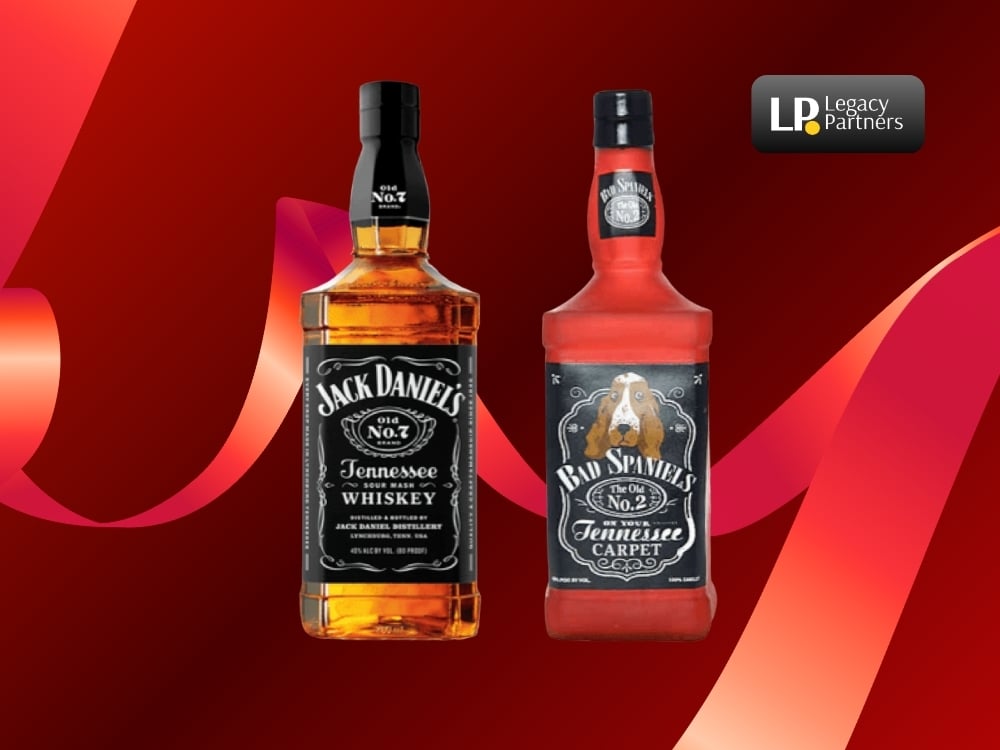
- Product in dispute: a squeaky dog toy shaped like the Jack Daniel’s bottle, labelled “Old No. 2 on Your Tennessee Carpet” and “43% Poo by Vol.”
- Claims brought: trademark infringement and trade dress infringement, plus dilution by tarnishment
- Supreme Court ruling: Jack Daniel’s Properties, Inc. v. VIP Products LLC, 599 U.S. 140 (2023), decided 8 June 2023, unanimous, opinion by Justice Kagan
- Governing law: Lanham Act, 15 U.S.C. 1114 and 1125(a) for infringement; 15 U.S.C. 1125(c) for dilution of famous marks
- Outcome on remand: no likelihood of confusion, yet liability for dilution by tarnishment
What Was the Bad Spaniels Dispute Actually About?
VIP Products sells the Silly Squeakers range, chew toys that mimic well-known beverage bottles. The Bad Spaniels toy copies the squared bottle shape, the black label, the arched white lettering and the filigree border that consumers associate with Jack Daniel’s. The words were swapped for dog humour, and the packaging carried a disclaimer stating that the product was not affiliated with Jack Daniel Distillery.
Jack Daniel’s demanded that VIP stop selling the toy. VIP responded by suing for a declaration that the toy was lawful. Jack Daniel’s counterclaimed for infringement of its registered marks and unregistered trade dress, and for dilution by tarnishment of a famous mark.
What Did the Supreme Court Decide in 2023?
The Ninth Circuit had treated the toy as an expressive work and applied the Rogers v. Grimaldi filter, which shields artistic expression unless the use has no artistic relevance or explicitly misleads. On that basis, the ordinary likelihood of confusion analysis was never reached, and the dilution claim was dismissed as noncommercial parody.
The Supreme Court vacated that approach on two points:
- Rogers does not apply when the accused party uses another trader’s mark as a designation of source for its own goods. Because VIP used the Bad Spaniels look to identify and sell its own toy, the case had to be judged under the standard multi-factor confusion test.
- The statutory exclusion for noncommercial use in 15 U.S.C. 1125(c)(3) does not rescue a parody that functions as a source identifier. Parody is relevant, but it is not an automatic defence to tarnishment.
What the Court did not decide: whether consumers were confused, and whether the mark was tarnished. Those questions went back to the lower courts to be answered on the ordinary rules.
Why Did the Court Find No Trademark Infringement?
On remand the confusion analysis turned on how an ordinary shopper would read the product in context. The findings that mattered:
- The product category is remote. Nobody shops for a chew toy in the whiskey aisle, and the trade channels barely overlap.
- The label copy signals a joke. “Old No. 2 on Your Tennessee Carpet” cannot be read as a genuine brand extension.
- The parody is obvious rather than subtle, so the humour depends on the buyer knowing the original and understanding it is not the original.
- There was no credible evidence that buyers believed Jack Daniel’s had produced, licensed or approved the toy.
Why Was It Still Trademark Dilution by Tarnishment?
Dilution protects something different. Under 15 U.S.C. 1125(c), the owner of a famous mark can act against a use that is likely to blur the mark’s distinctiveness or tarnish its reputation, and confusion is not an element of the claim.
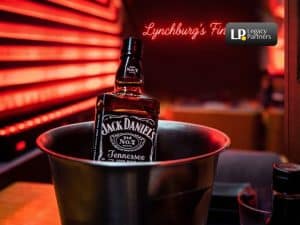
Jack Daniel’s is indisputably famous, so the gate to the dilution remedy was open. The court then held that pairing that famous whiskey identity with excrement humour created an unsavoury association likely to harm the mark’s reputation. The clarity of the joke, which defeated the infringement claim, did nothing to cure that harm. If anything, the joke only lands because the association with the real brand is unmistakable.
The point brand owners should carry away
A disclaimer and an obvious punchline can defeat confusion. Neither erases reputational harm to a famous mark. Parody is a factor in the dilution analysis, not a shield, once the parody is used to sell the parodist’s own product
What Is the Difference Between Infringement and Dilution?
| Test point | Trademark infringement | Dilution of a famous mark |
| Core question | Are buyers likely to be confused about source, sponsorship or affiliation? | Is the mark’s distinctiveness blurred or its reputation tarnished? |
| Who can sue | Any owner of a protectable mark | Only owners of marks famous to the general consuming public |
| Confusion needed | Yes, it is the heart of the claim | No, expressly not required |
| Competition needed | Helps, but not essential | Not required at all |
| Parody’s effect | Often defeats confusion | Weighed as a factor, not a defence, where the mark identifies the defendant’s goods |
| Typical remedy | Injunction, damages, profits | Injunction, with monetary relief for wilful conduct |
Does the Parody Exception Ever Protect a Commercial Parody?
Yes, but within limits. The fair use carve-out in 15 U.S.C. 1125(c)(3)(A) covers parody, criticism and comment on the famous mark or its owner. The carve-out is switched off when the parody is used as a designation of source for the parodist’s own goods or services. Practical consequence: commentary, satire in editorial content and criticism sit comfortably inside the exception, whereas branded merchandise that trades on a famous look does not.
How Do the UAE and India Treat Dilution of Famous Marks?
The doctrine is not confined to the United States, so the reasoning travels further than many brand teams expect.
- UAE: Federal Decree-Law No. 36 of 2021 on Trademarks gives well-known marks protection beyond the registered class, including against uses that damage reputation or exploit distinctiveness, whether or not confusion is shown.
- India: Section 29(4) of the Trade Marks Act 1999 covers use on dissimilar goods that takes unfair advantage of, or is detrimental to, the distinctive character or reputation of a registered mark. Indian courts have restrained parody style uses on that basis.
- United Kingdom and EU: the same idea appears as protection against detriment to reputation and unfair advantage for marks with reputation.
- Common thread: fame widens the protective ring. The stronger the mark, the less a defendant gains from proving that nobody was actually fooled.
What Should Brand Owners and Product Teams Do Now?
If you own a famous mark
- Build and keep a fame file: advertising spend, sales volumes, market surveys, unsolicited media, awards and enforcement history.
- Plead infringement and dilution together. They fail and succeed independently, as this case shows.
- Register trade dress elements such as bottle shape, label layout and colour where the jurisdiction allows it.
- Watch merchandise categories that sit far from your own class, since that is where dilution risk hides.
If you are launching a parody or novelty product
- Do not rely on a disclaimer. It addresses confusion and not reputational harm.
- Ask whether the borrowed look is doing the selling. If it is, you are using it as a source identifier and the safe harbours narrow.
- Avoid pairing a famous mark with scatological, sexual, violent or unlawful themes, which is the classic tarnishment fact pattern.
- Clear the concept before tooling, packaging and inventory commitments are made.
Protect Your Brand Before Someone Else Defines It
With 15+ years of intellectual property experience, Legacy Partners helps businesses protect, monitor, and enforce their trademarks and trade dress across key internationals contact info@legacypartners.global
Frequently asked questions
Who won the Bad Spaniels case?
The outcome was split. VIP Products escaped liability for trademark infringement because no likelihood of confusion was found, while Jack Daniel’s succeeded on dilution by tarnishment.
What did the Supreme Court hold in Jack Daniel’s v. VIP Products?
It held that the Rogers v. Grimaldi test does not apply when a mark is used as a source identifier for the defendant’s own goods, and that the noncommercial use exclusion does not shield such a parody from a dilution claim.
Is parody a complete defence to trademark infringement?
No. Parody often defeats confusion, which is why infringement claims can fail, but it does not automatically defeat dilution or false advertising claims.
What is trademark dilution by tarnishment?
It is harm to the reputation of a famous mark caused by association with something unsavoury, offensive or degrading, established without proof that consumers were confused.
What is the difference between blurring and tarnishment?
Blurring weakens the link between the mark and a single source through unrelated uses. Tarnishment damages the reputation of the mark through an unflattering association.
Does a disclaimer protect a parody product?
Only partially. A disclaimer helps on confusion but does not address reputational harm, so it cannot defeat a tarnishment claim on its own.
Which marks qualify as famous for dilution purposes?
Marks widely recognised by the general consuming public of the United States. Niche recognition within one trade sector is not enough.